Leave Your Message
0%

You can check out more about Aerospace Applications, which have really changed the game in aviation. Big players like Boeing and SpaceX are pushing the boundaries with all kinds of innovative ideas. It’s pretty exciting how new tech is basically rewriting what we think is possible—whether that's flying or exploring space.

From super light materials to cutting-edge propulsion systems, every little breakthrough matters. They’re making travels safer and more efficient, no doubt. But, of course, not everything’s perfect—some innovations run into hiccups with reliability or end up costing more than expected.

Many companies are trying hard to get everything just right, but they do slip up sometimes. Honestly, I think it's super important to learn from those mistakes. Every setback teaches us something new, helping us craft better Aerospace solutions down the line. The future looks promising, but we’ve gotta be careful and thoughtful along the way. After all, knowing the journey—what's worked and what hasn't—is just as vital as reaching the end goal.
Top Aerospace Applications You Should Know About?

Emerging Technologies in Aerospace Industry

Emerging technologies in the Aerospace industry are reshaping the landscape. These advancements promise efficiency and sustainability. According to a recent report by the Aerospace Industries Association, the global market is expected to grow by over 20% within the next five years. This growth highlights the sector's fast-evolving nature, driven by innovations in manufacturing processes and materials.

Additive manufacturing, commonly known as 3D printing, is a major breakthrough. It reduces waste and allows for complex designs that were once impossible. The ability to create Lightweight parts is crucial. It not only saves fuel but also enhances performance. Research indicates that 3D printing can cut production time by 50% in certain cases. Yet, challenges in material safety and long-term durability raise valid concerns.

Tip: Stay updated on the latest trends in aerospace technology. Continuous learning can help you navigate this dynamic field.

Artificial intelligence (AI) is another game-changer. It optimizes flight routes and improves safety by predicting potential issues. However, reliance on AI poses risks. There's a constant need to question and validate AI decisions. The potential for technical failures can be alarming. While the aerospace industry pushes boundaries, addressing these shortcomings is essential for future success.

Tip: Embrace a culture of innovation. Regularly evaluate emerging technologies and their implications. The future of aerospace depends on informed choices.

Commercial Aviation Innovations and Their Impact

The aerospace sector is witnessing significant transformations. Innovations in commercial aviation are reshaping travel experiences. According to a recent industry report, the global commercial aviation market is expected to grow at a CAGR of 3.8% through 2030. This growth is fueled by advances in fuel efficiency and passenger comfort.

New materials, such as composite structures, are becoming the norm in aircraft design. These materials reduce weight, leading to lower fuel consumption. However, the transition to these advanced materials is not without challenges. Manufacturers must balance durability and cost. Sustainable aviation fuel (SAF) is another key innovation. Studies suggest that SAF can reduce lifecycle carbon emissions by up to 80%. Yet, availability and production capacity can be limiting factors.

Tips: Integrating Architectural Applications into aircraft design can enhance structural integrity. Staying informed about industry trends is essential. Understanding how these innovations impact operational costs can also help airlines adapt. Collaboration between engineering sectors may yield new solutions. Reflecting on the pace of innovation reveals a need for balanced adoption. Some advancements require more rigorous testing before widespread use. The future of aviation is bright but complex.

Top Aerospace Applications: Innovations in Commercial Aviation

Military Aerospace Advancements and Applications

Top Aerospace Applications You Should Know About?

Military aerospace advancements are rapidly evolving. Innovations focus on enhancing capabilities and efficiency. Recent developments showcase numerous applications that redefine modern warfare. Unmanned aerial vehicles (UAVs) are a prime example. They provide surveillance without risking lives. Armed drones offer precision strikes, but they raise ethical questions about remote warfare.

Another key advancement is the use of advanced materials. Lightweight composites, such as Basalt Fiber Applications, improve durability while reducing weight. These materials resist extreme temperatures and harsh environments. Implementation of these fibers enhances overall aircraft performance. However, their production can be costly, and scalability remains a concern.

Artificial intelligence (AI) also plays a crucial role in military aerospace. AI systems analyze vast amounts of data in real-time. They support decision-making and improve mission success rates. But over-reliance on technology poses risks. Human oversight is essential. Balancing tech use with human judgment is necessary for effective outcomes.

Space Exploration Technologies: Current Trends

Top Aerospace Applications You Should Know About?

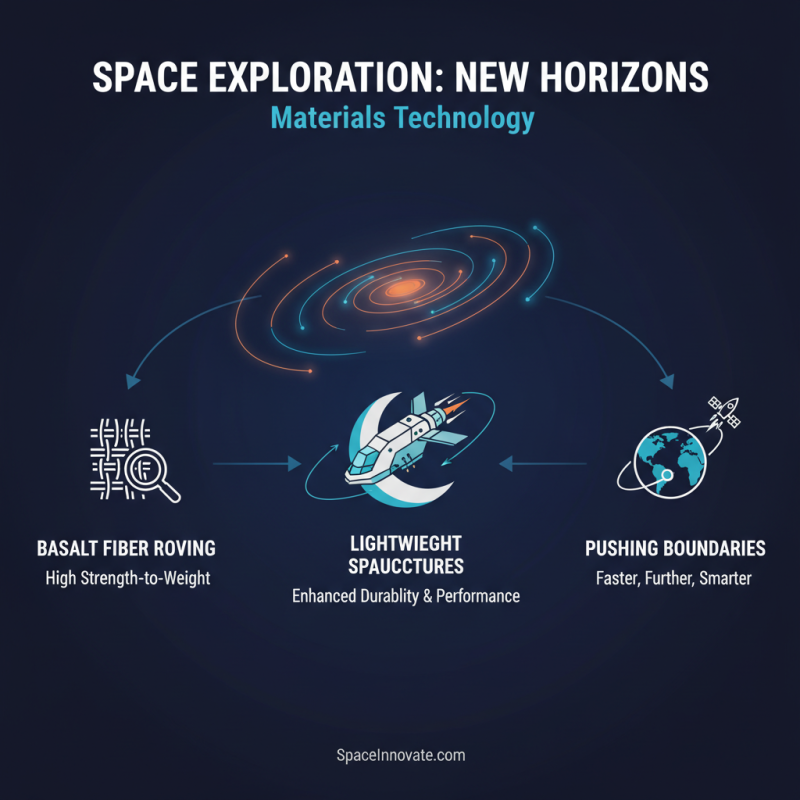
Space exploration has rapidly evolved in recent years. Current trends highlight innovations that push boundaries like never before. One area gaining attention is materials technology. For example, materials such as Basalt fiber roving are becoming popular. These materials offer excellent strength-to-weight ratios, making them suitable for spacecraft structures.

Moreover, reusable spacecraft are transforming space missions. They reduce costs and time, allowing for more frequent launches. Advances in propulsion systems also enable faster travel times to Mars and beyond. Innovations like ion propulsion systems are now in the spotlight. These trends show the exciting future of exploring outer space.

Tips: When considering materials for aerospace applications, evaluate the environmental impact. Sustainable choices can lead to long-term benefits. Also, always test new technologies thoroughly. This approach minimizes risks during critical missions. The aerospace industry is a complex web of innovation and obstacles. Embracing both successes and failures can drive progress in this fascinating field.

Next-Generation Aircraft and Sustainability Initiatives

Next-generation aircraft are at the forefront of innovation. Designers focus on reducing emissions and enhancing fuel efficiency. This not only benefits the environment but also makes flying more affordable. Electric and hybrid engines are emerging trends, aiming to minimize traditional fuel reliance. These technologies are nascent, and challenges remain in battery energy density and weight.

Sustainability initiatives are becoming integral to aerospace. Engineers are exploring alternative materials, such as biofuels and composites. These innovations promise lighter, more durable aircraft. Yet, the aviation industry often struggles with the balance between performance and sustainability.

Regulatory hurdles and infrastructure readiness can hinder progress. Continuous effort is needed to align aircraft development with environmental goals.

Satellite Technologies and Global Communication

Satellite technologies play a crucial role in global communication. They enable real-time data transmission across vast distances, connecting people worldwide. From weather forecasting to remote education, their impact is profound. Satellites allow us to access information instantly. Communication through satellites reaches remote areas with no infrastructure. This technology bridges gaps, but it’s not without challenges.

However, satellite systems are costly to launch and maintain. Orbital debris poses a growing risk to operational satellites. As the number of satellites increases, so do the chances of collisions. These challenges require innovative solutions and international cooperation. The promise of global communication must be balanced with sustainability. We need to rethink how we manage space resources.

Effective communication relies on collaboration between different countries and organizations. There are often disparities in access and technology. Some regions still lack basic connectivity. This raises ethical questions about equity in technology. Ensuring everyone benefits from satellite communication remains a significant challenge. The journey toward comprehensive global communication is far from complete.

Unmanned Aerial Vehicles and Their Practical Uses

Unmanned Aerial Vehicles (UAVs) are transforming various sectors. Their applications span agriculture, emergency services, and infrastructure inspection. A recent report by the Federal Aviation Administration (FAA) highlighted that commercial UAV usage could contribute over $82 billion to the U.S. economy by 2025. This shows the potential UAVs hold.

In agriculture, UAVs enhance efficiency. Farmers use drones for crop monitoring and mapping. According to precision agriculture studies, UAVs increase yields by 10-15%. However, challenges remain in data processing and real-time analysis. The reliability of technological systems can also be problematic. UAVs face weather-related limitations that hinder their functionality.

In emergency services, UAVs improve response times. They offer aerial views in disaster scenarios. Recent research found that UAVs can reduce search and rescue operations by up to 60%. Yet, concerns about data privacy and airspace regulations persist. Balancing innovation and safety is crucial. UAV technology is promising, but continuous reflection on its ethical implications is necessary.

FAQS

: What types of products are commonly sold online?

: Many platforms offer electronics, clothing, home goods, and personal care items.

How to ensure product quality when shopping online?

Check customer reviews and ratings. Look for detailed product descriptions and images.

Are returns easy with online purchases?

Return policies vary. Some sites make it easy, while others can be finicky.

How can I protect my personal information while shopping online?

Use secure payment methods. Avoid sharing excessive personal details on websites.

What should I do if I receive a damaged item?

Contact customer service right away. Provide photos as proof when possible.

Can I negotiate prices on online platforms?

Typically, price negotiation is rare. However, promotions or discounts may be available.

How long does shipping usually take?

Shipping times depend on location and service chosen. Some items arrive quickly, others take longer.

Why is my order delayed?

Delays can happen due to high demand, shipping issues, or inventory problems. Patience is key.

What are the risks of buying from unknown sellers?

There’s a chance of scams or receiving low-quality products. Research before purchasing.

How do I track my online order?

Most retailers provide tracking numbers via email. Check their website for updates too.

Conclusion

The aerospace industry is experiencing rapid advancements across various sectors, significantly enhancing aerospace applications in both commercial and military domains. Emerging technologies are driving innovation in commercial aviation, leading to safer, more efficient flights and fostering sustainability initiatives in next-generation aircraft. Military aerospace applications are also evolving, with advancements in technology enhancing operational capabilities and strategic advantages.

Space exploration technologies are witnessing dynamic trends, contributing to our understanding of the universe and enabling further exploration initiatives. Additionally, satellite technologies play a crucial role in global communication, ensuring connectivity across vast distances. Unmanned Aerial Vehicles (UAVs) are being increasingly utilized in practical applications, ranging from agricultural monitoring to disaster response. Collectively, these advancements highlight the transformative impact of aerospace applications on modern society and future prospects.

Alexander

Alexander

Alexander is a dedicated marketing professional at Jiujiang Beihai Glass Fiber Co., Ltd. (Project Four), where he plays a pivotal role in enhancing the company's market presence. With a deep expertise in glass fiber products, he consistently demonstrates a profound understanding of the industry and......
Previous Innovative Approaches for Utilizing Basalt Cleavage in Modern Applications