Leave Your Message
0%

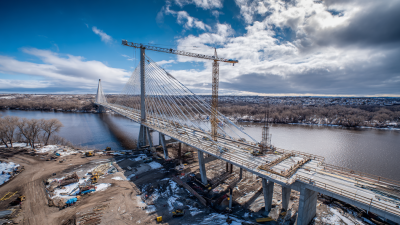
Bridge Construction holds a paramount role in the realm of infrastructure development, serving as a crucial component that facilitates connectivity and boosts economic growth. According to a report by the American Society of Civil Engineers (ASCE), the United States alone has over 617,000 bridges, with approximately 42% classified as either "structurally deficient" or "functionally obsolete." This alarming statistic underscores the urgent need for significant investments in bridge construction to ensure safe and efficient transportation networks.

Moreover, the Federal Highway Administration (FHWA) highlights that for every $1 billion invested in bridge construction, around 27,800 jobs are created, along with supporting local economies through improved access to trade routes and services. The enhancement of bridges not only alleviates traffic congestion but also reduces carbon emissions by promoting efficient transportation. As urban populations continue to rise and the demand for resilient infrastructure escalates, the importance of bridge construction becomes ever more evident, paving the way for sustainable development and social progress.

Why Is Bridge Construction Important for Infrastructure Development?

The Role of Bridges in Supporting Economic Growth and Connectivity

Why Is Bridge Construction Important for Infrastructure Development?

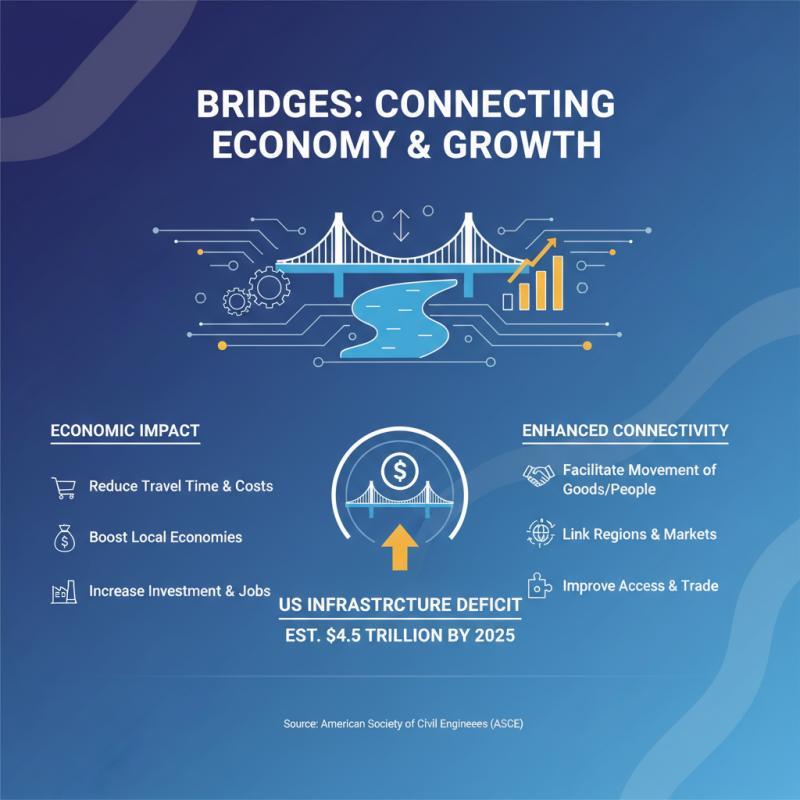
Bridges play a critical role in supporting economic growth and enhancing connectivity between regions. According to a report by the American Society of Civil Engineers, the infrastructure deficit in the United States alone is estimated to reach $4.5 trillion by 2025. Bridges are central to this issue, as they facilitate the movement of goods and people. Improved bridge infrastructure can reduce travel time and costs, which in turn boosts local economies. Regions with reliable bridge access often see increased investments and job creation, highlighting the direct correlation between bridge availability and economic prosperity.

Investing in bridge construction not only boosts immediate economic activities but also enhances long-term connectivity. A study by the European Commission reported that improved transportation infrastructure could increase GDP by up to 2.5% in the regions served. This economic uplift arises from lower transportation costs, greater accessibility to markets, and increased competitiveness for local businesses. In rural areas, where bridges can connect otherwise isolated communities to broader economic hubs, the impact can be profound, reducing poverty rates and improving overall quality of life.

Tips for promoting effective bridge construction include conducting comprehensive feasibility studies before initiating projects. Engaging local communities throughout the planning and execution phases ensures that projects are tailored to the specific needs of the area. Additionally, leveraging modern technology in bridge design can lead to more Durable structures that minimize maintenance costs over time, ultimately providing a stronger backbone for regional development.

Bridge Design and Engineering Innovations in Modern Infrastructure Projects

Bridge design and engineering have evolved dramatically with advancements in technology and materials, leading to innovative solutions that enhance the structural integrity and longevity of bridges. Modern infrastructure projects now utilize materials like high-performance concrete and advanced steel alloys, which offer superior strength-to-weight ratios and resistance to environmental degradation. These innovations not only improve the durability of bridges but also allow for more aesthetically pleasing designs that blend with their surroundings, enhancing the overall urban landscape.

Furthermore, modern engineering practices incorporate sophisticated design methodologies such as computer-aided design (CAD) and parametric modeling. These tools enable engineers to simulate various loading conditions and material behaviors, ensuring that each bridge can withstand environmental challenges, such as extreme weather or seismic activity. Additionally, the integration of sustainable practices, such as the use of recycled materials and energy-efficient construction techniques, has become increasingly vital in contemporary bridge projects. As a result, the emphasis on innovative design and engineering not only fulfills the functional requirements of modern infrastructure but also addresses the growing necessity for sustainability in construction.

Impact of Bridge Construction on Urban Development and Land Value

The construction of bridges plays a pivotal role in shaping urban development and enhancing land value. According to a report by the American Society of Civil Engineers, inadequate transportation infrastructure, including bridges, hampers economic growth by as much as $3.7 trillion annually in the United States alone. By establishing robust connections between various urban areas, bridges facilitate the movement of goods and people, effectively reducing travel times and fostering trade. This connectivity not only enhances accessibility but also encourages investments in surrounding areas, leading to an increase in property values.

Moreover, bridges can significantly transform the urban landscape. A study from the Urban Institute found that areas within a half-mile radius of newly constructed bridges often see property values increase by 10 to 20%. This boost in land value stems from improved accessibility to commercial centers, schools, and parks, making such areas more attractive to potential homebuyers and businesses alike. Additionally, efficient transportation systems reduce commute times, contributing to a higher quality of life, which further propels urban development.

In summary, the construction of bridges is more than just an engineering feat; it is a crucial catalyst for urban growth and economic vitality, laying the groundwork for sustainable communities.

Statistics on Traffic Flow and Safety Improvements from New Bridges

Why Is Bridge Construction Important for Infrastructure Development?

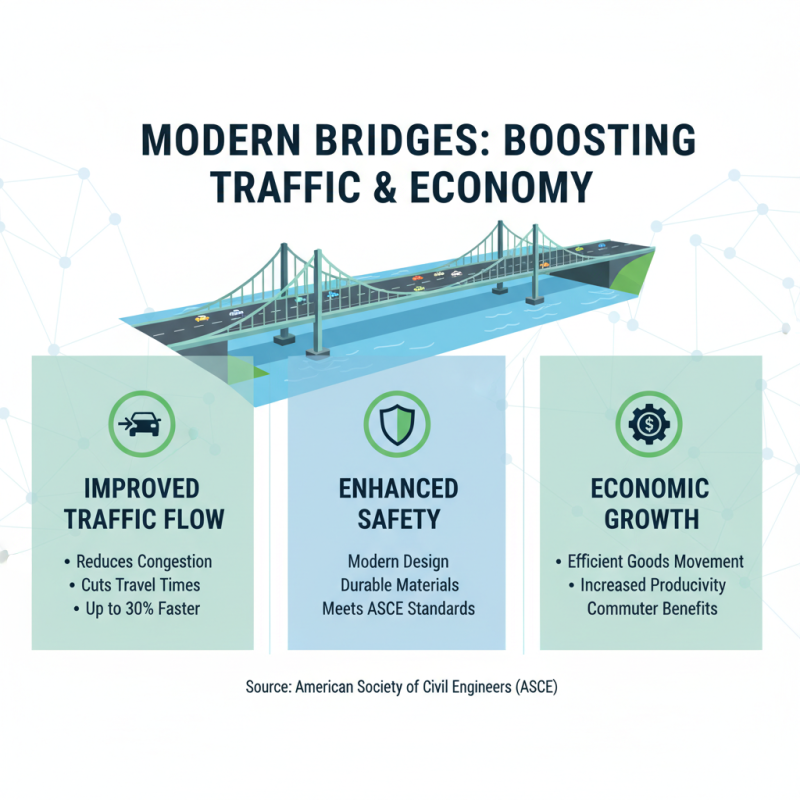
The construction of bridges is a critical component of infrastructure development, with significant implications for traffic flow and safety. According to the American Society of Civil Engineers (ASCE), the deterioration of aging infrastructure leads to increased congestion and travel times, which can be mitigated by the construction of new bridges. Recent studies indicate that modern bridges can improve traffic flow by as much as 30%, significantly reducing delays on major thoroughfares. This improvement not only helps commuters but also enhances economic productivity by facilitating the efficient movement of goods and services.

Safety improvements are another vital aspect of new bridge construction. The Federal Highway Administration (FHWA) reports that newer bridge designs incorporate advanced materials and technologies that enhance structural integrity and resilience. This results in a reduction in accidents and fatalities associated with bridge-related incidents. Statistical analyses reveal that regions investing in new bridge infrastructure have experienced up to a 40% decrease in collision rates and a 25% reduction in serious injuries. As urban populations continue to grow, the development of reliable and safe bridge infrastructure will remain essential in supporting both mobility and community safety.

Environmental Considerations and Sustainability in Bridge Construction

The significance of environmental considerations and sustainability in bridge construction cannot be overstated, particularly as global infrastructure development accelerates. According to the American Society of Civil Engineers (ASCE), approximately 40% of the world’s bridges are aging or in need of repair, highlighting the urgent need for sustainable construction practices that minimize environmental impact while ensuring structural integrity. Modern bridge construction increasingly prioritizes eco-friendly materials and methods such as using recycled steel and concrete, which can significantly lower carbon emissions associated with production processes.

Incorporating sustainable design principles into bridge construction not only addresses immediate environmental concerns but also supports long-term ecological balance. The use of innovative technologies, like modular construction, can reduce waste and energy consumption on-site. A report from the World Economic Forum underscores that implementing sustainable building techniques could save the global construction industry as much as $1.3 trillion annually by 2030. Furthermore, integrating natural features, such as wildlife passages within bridge designs, can enhance biodiversity and mitigate disruptions to local ecosystems. By aligning infrastructure projects with sustainable development goals, bridge construction plays a pivotal role in fostering resilience against climate change while facilitating essential connectivity.

The Contribution of Bridges to Disaster Resilience and Recovery Efforts

Bridges play a vital role in enhancing disaster resilience and recovery efforts, serving as critical links in the infrastructure network during emergencies. When natural disasters strike, such as earthquakes, floods, or hurricanes, the impact on transportation systems can be devastating. Bridges facilitate the movement of emergency services, humanitarian aid, and evacuation efforts, ensuring that affected communities can receive timely assistance. Their strategic placement and structural integrity are essential for creating reliable routes that can withstand the challenges posed by such events.

Moreover, the design and construction of bridges are increasingly focused on disaster preparedness. Engineers are adopting advanced materials and techniques that enhance the durability and flexibility of bridges, allowing them to endure extreme weather conditions and seismic activities. By incorporating resilient design principles, bridges not only support immediate relief operations but also contribute to the long-term recovery of affected regions. They enable access for reconstruction teams, allowing for the swift rebuilding of infrastructure vital to restoring normalcy in the aftermath of a disaster.

Through these efforts, bridges are not merely structures; they are lifelines that support resilience and recovery, highlighting their indispensable value in infrastructure development.

Funding and Investment Trends in Global Bridge Infrastructure Development

Funding and investment in global bridge infrastructure development have become increasingly vital as urbanization and transportation demands grow. According to a report by the American Society of Civil Engineers (ASCE), the United States alone requires an estimated $4.5 trillion by 2025 to maintain and improve its infrastructure systems, including bridges. This urgent need for funding emphasizes the importance of public-private partnerships (PPPs) in financing large-scale projects. Many countries are turning to international financing institutions and private investors to address these funding challenges, creating a mix of capital that fosters innovation and efficiency in bridge construction.

The global bridge construction market is expected to reach $2.8 trillion by 2027, growing at a CAGR of 5.6% from 2020 to 2027, as indicated by a report from Grand View Research. This growth trend underscores the increasing investment flow into infrastructure development, driven by governmental initiatives, urbanization, and the need for modern, resilient transportation networks. Regions like Asia-Pacific are leading this charge, with countries like China and India significantly increasing their budgets for public infrastructure projects. As investment continues to pour into bridge construction, the emphasis on sustainable technologies and innovative design practices will shape the future of infrastructure development, ensuring that bridges not only serve current needs but also accommodate future growth and environmental considerations.

Why Is Bridge Construction Important for Infrastructure Development?

Country Total Bridge Length (km) Investment ($ Billion) Completion Year Importance Index (1-10)
USA 600,000 75 2023 9
China 1,000,000 120 2022 10
India 150,000 30 2024 8
Brazil 160,000 25 2025 7
Germany 40,000 20 2023 8

Innovative Applications of Basalt Rebar in Reinforcing Bridges and Roads for Enhanced Durability and Sustainability

Basalt fiber reinforced polymer (BFRP) is emerging as a revolutionary material in the construction industry, particularly for reinforcing bridges and roads. This innovative composite utilizes basalt fibers, combined with a resin matrix such as epoxy or vinyl ester, to create a product that overcomes the limitations of traditional steel reinforcement. One of the most significant advantages of BFRP is its superior resistance to corrosion, making it ideal for infrastructure exposed to harsh environmental conditions. By reducing the need for frequent maintenance and repair, BFRP contributes to greater longevity and reliability in construction projects.

Moreover, BFRP is substantially lighter than steel, which not only facilitates easier handling and installation but also contributes to lower transportation costs. Its lightweight nature allows for more flexible design options, enabling engineers to create structures that are more efficient and environmentally friendly. Additionally, the non-magnetic properties of basalt fibers make BFRP advantageous in applications near sensitive electronic equipment, as it eliminates issues related to electromagnetic interference.

Incorporating BFRP into road and bridge construction not only enhances durability but also aligns with the growing demand for sustainable building practices. As the industry shifts toward greener materials, BFRP represents a significant step forward in achieving more durable and environmentally responsible infrastructure. With its unique combination of strength, resilience, and lightweight properties, BFRP is set to redefine the standards for reinforcing materials in modern construction.

FAQS

: What is the economic impact of improved bridge infrastructure?

: Improved bridge infrastructure can significantly reduce travel time and costs, leading to boosted local economies and increased investments and job creation.

How does bridge access influence job creation?

Regions with reliable bridge access typically experience higher levels of investment and job creation, directly correlating bridge availability with economic prosperity.

What role do bridges play in rural areas?

In rural areas, bridges connect isolated communities to larger economic hubs, which can reduce poverty rates and enhance overall quality of life.

What are some important considerations for effective bridge construction?

Comprehensive feasibility studies and community engagement during the planning and execution phases are crucial for tailoring projects to local needs.

Why are public-private partnerships important in bridge funding?

Public-private partnerships are essential for financing large-scale projects, especially given the urgent funding needs for infrastructure improvement.

What is the projected growth of the global bridge construction market?

The global bridge construction market is expected to reach $2.8 trillion by 2027, with a compound annual growth rate (CAGR) of 5.6% from 2020 to 2027.

What trends are influencing investment in bridge infrastructure?

Increasing urbanization, transportation demands, and governmental initiatives are driving significant investment flows into bridge infrastructure development.

How can modern technology impact bridge construction?

Leveraging modern technology in bridge design can lead to more durable structures, reducing long-term maintenance costs and fostering regional development.

What are the economic benefits of improved transportation infrastructure according to the European Commission?

Improved transportation infrastructure could increase GDP by up to 2.5% in the regions it serves due to lower transportation costs and greater business competitiveness.

What is the importance of sustainable technologies in bridge construction?

Emphasizing sustainable technologies in bridge construction ensures that infrastructure meets current needs while accommodating future growth and environmental considerations.

Conclusion

Bridge construction plays a critical role in infrastructure development, significantly impacting economic growth and enhancing connectivity within urban and rural areas. By improving transportation networks, bridges facilitate efficient movement of goods and people, which in turn boosts local economies. Moreover, modern innovations in bridge design and engineering contribute to more durable and safe infrastructure, leading to improved traffic flow and reduced accident rates.

The construction of new bridges also elevates land values and promotes urban development, while addressing environmental sustainability concerns through eco-friendly practices. Additionally, bridges are vital in supporting disaster resilience and recovery, ensuring that communities remain connected during emergencies. Current trends in funding and investment highlight the importance of advancing global bridge infrastructure to meet the demands of growing populations and urbanization, underscoring the essential role of bridge construction in shaping resilient and connected societies.

Isabella

Isabella

Isabella is a dedicated marketing professional at Jiujiang Beihai Fiberglass Co., Ltd. (Project Four), specializing in promoting the company's diverse range of high-quality fiberglass products. With a deep understanding of the industry and a passion for innovation, she plays a vital role in driving......
Previous Innovative Approaches for Utilizing Basalt Cleavage in Modern Applications