Leave Your Message
0%

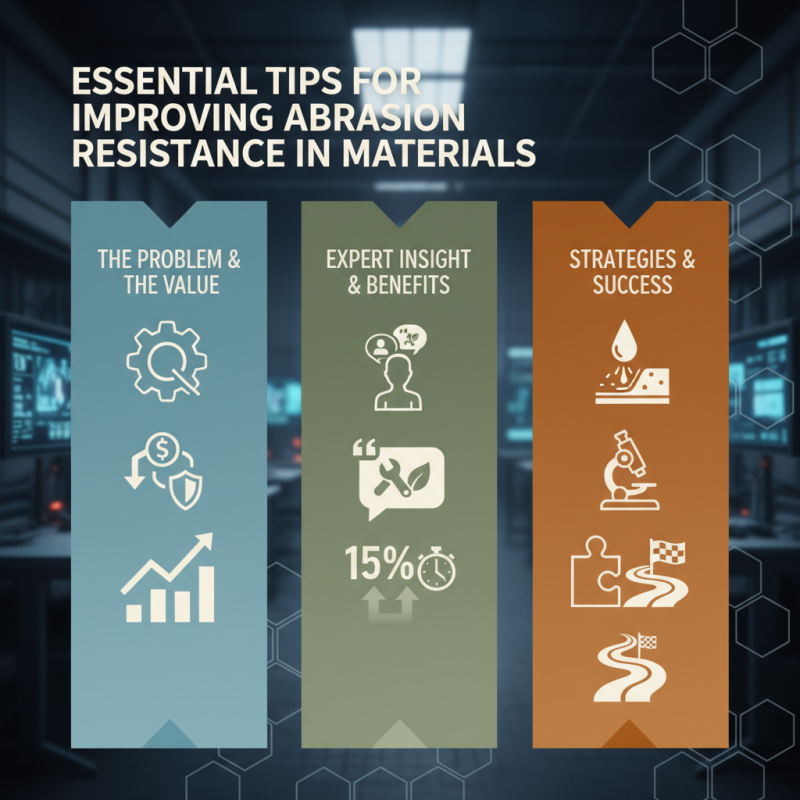
In today’s tough manufacturing world, making materials more resistant to wear and tear really isn’t just a bonus — it’s a must. Did you know that, according to folks in the Material Science Industry, about 25% of production losses come from equipment wearing out or breaking down? That’s huge! When it comes to products lasting longer and performing well, Abrasion Resistance plays a major role. As Joe Smith, a seasoned expert at Advanced Materials Research, puts it, "Durability starts with choosing the right materials."

Companies that’ve jumped on the bandwagon and invested in abrasion-resistant solutions often see a big drop in maintenance costs — sometimes up to 15% overall. That’s no small change! It really highlights how crucial it is to use materials that last. Still, even with all these benefits, many companies tend to overlook just how important material selection really is.

Getting better at abrasion resistance isn’t always straightforward. Sometimes, just a few simple tweaks — like choosing the right coatings or adding certain additives — can make a surprising difference. But, sadly, a lot of manufacturers skip proper testing under real-world conditions. That’s a risky move, because it can lead to unexpected failures and costly delays down the line. Learning about abrasion resistance isn’t just a good idea — in today’s market, it’s pretty much essential if you want to stay ahead and succeed long-term.
Essential Tips for Improving Abrasion Resistance in Materials?

Understanding Abrasion Resistance in Materials

Understanding abrasion resistance in materials is crucial for many industries. It refers to a material's ability to withstand wear from friction. This can influence product lifespan and performance. According to a 2022 industry report, nearly 30% of machinery failures are due to wear-related issues. Improving resistance can significantly reduce costs.

Different materials exhibit varying levels of abrasion resistance. Metals, for instance, generally perform better than plastics under heavy wear. A study revealed that hardened steel can offer up to five times better resistance compared to standard grades. However, not all applications require high resistance. Sometimes, flexibility is equally important, which can lead to trade-offs.

Testing methods such as the Taber abrasion test reveal essential data. They measure how a material reacts under specific forces. Yet, it is vital to address that these tests may not perfectly represent real-world conditions. Variations in environment and load can lead to unexpected outcomes. Hence, understanding the context of usage is critical.

Essential Tips for Improving Abrasion Resistance in Materials

Material Type Abrasion Resistance Rating (1-10) Key Enhancements Common Applications
Polyurethane 9 Additives for strength and flexibility Industrial conveyor belts
Steel 8 Surface hardening techniques Mining equipment
Rubber 7 Polymer composites Automotive tires
Ceramics 8 Toughening agents Protective coatings
Composite Materials 9 Fiber Reinforcement Aerospace components

Key Factors Influencing Abrasion Resistance

Abrasion resistance is critical for many materials. Several key factors influence how well materials stand up to wear and tear. One significant aspect is the material composition. Different mixes can result in unique properties. For instance, harder materials often exhibit better resistance, but are not always practical for every application. Balancing hardness and flexibility is essential.

Surface treatment is another factor. Coatings can enhance durability significantly. However, not all coatings adhere properly. Selecting the right application method is crucial. In some cases, the environment may affect the coating's performance over time. Extreme conditions like high temperatures or moisture can compromise the benefits of these treatments.

Finally, upkeep plays a role. Regular inspections can reveal wear issues early. Some materials may require additional care or maintenance to sustain their properties. Noticing minor abrasions can indicate larger concerns ahead. It’s vital to consider these aspects for long-term effectiveness. Remember, even the most robust materials need attention to keep them performing at their best.

Material Selection for Enhanced Durability

When selecting materials for enhanced durability, key factors must be considered. Materials with high abrasion resistance can significantly prolong the lifespan of products. Reports from industry experts show that using steel with an increased hardness rating can help. Steel with a Rockwell hardness of 50 or higher offers better durability against wear.

Choosing the right polymer can also boost longevity. For example, polyethylene has excellent abrasion resistance. It's used in various applications, from packaging to engineering components. It can withstand repeated impacts and friction, making it ideal for heavy use. However, it's essential to remember that not all grades of polyethylene are equal.

Tips for improving material selection include evaluating the environment where the material will be used. Understanding factors like humidity and temperature can influence performance. Testing materials under real-world conditions is crucial. Many fail to do this, relying solely on laboratory tests. Testing in varied conditions can expose weaknesses. Be aware of potential trade-offs in material performance. Sometimes, a balance must be struck between cost and durability.

Coatings and Treatments to Improve Resistance

Coatings and treatments can significantly enhance the abrasion resistance of materials. One effective method is applying polyurethane coatings. These coatings create a tough, flexible layer that absorbs impacts. They also offer excellent resistance to chemicals, making them ideal for various environments.

Another promising treatment is epoxy resin. It forms a hard surface that withstands wear and tear. Epoxy is suitable for flooring and industrial applications, often used in settings with heavy machinery. However, the application process can be tricky, requiring careful surface preparation. Poor application can lead to peeling or early wear.

Tips for achieving better abrasion resistance include ensuring surfaces are clean and dry before applying coatings. Consider testing small areas first to monitor adhesion and durability. Regular maintenance of coated surfaces can also prolong their life. Always evaluate the environmental conditions where the material will be used. This helps in selecting the most suitable treatment for optimal performance.

Testing Methods for Evaluating Abrasion Resistance

Evaluating abrasion resistance is crucial in material selection. Different testing methods can reveal how materials perform under wear. Common approaches include the Taber abrasion test, the oscillating test, and the falling sand test. Each method measures distinct aspects of abrasion resistance.

The Taber test gives a clear measure of weight loss after a specific number of cycles. It simulates real-world wear conditions. However, it may not capture all variables. The oscillating test looks at resistive forces. It can be more lab-intensive, yet it provides valuable data.

The falling sand test, though simple, can sometimes lead to misleading results. The particle size and drop height are critical factors. These details can skew results, making it tricky to interpret data effectively. Therefore, it is vital to choose the right method for the application. The process of evaluating is still evolving, highlighting areas for improvement and further research.

Maintenance Practices for Longevity of Materials

Maintaining materials for abrasion resistance is crucial. Regular inspections can reveal wear and tear. Look for surface damages or signs of fatigue. Early detection can save costs. Make it a habit to check materials frequently.

Cleaning surfaces is another vital practice. Use gentle cleaners to avoid further damage. Harsh chemicals can wear out protective coatings. A simple cloth can help remove dirt and debris. Always follow the material's care instructions.

Training staff on proper handling is essential. Misuse can lead to unnecessary deterioration. Create awareness about the importance of care. Encourage feedback about observed issues. A few small changes can extend material lifespan greatly. Remember, consistent attention is key.

Innovative Approaches in Material Engineering

Essential Tips for Improving Abrasion Resistance in Materials?

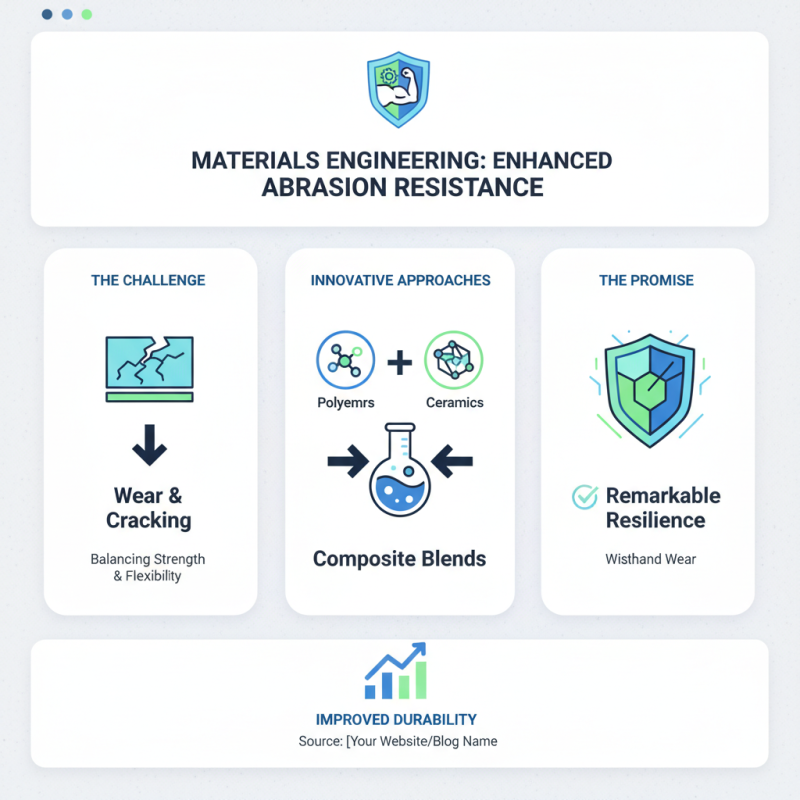
Innovative approaches in material engineering are crucial for enhancing abrasion resistance. Engineers are constantly experimenting with composites that combine strength with flexibility. By blending materials, they aim to create surfaces that can withstand wear without cracking. For example, mixing polymers with ceramics can lead to remarkable resilience. This method shows promise, yet achieving the perfect balance remains a challenge.

Another exciting development is the use of nanotechnology. Researchers are incorporating nanoparticles into materials to improve their surface properties. These tiny additions can significantly boost resistance to cuts and tears. However, scaling this technology for mass production poses limitations. There are reliability concerns that need further investigation.

Finally, bio-inspired designs are gaining traction. Nature has perfected ways to resist abrasion, such as the texture of mollusk shells. Mimicking these designs in synthetic materials shows potential. Yet, translating biological features into practical applications is complex. It requires time and iterative testing. Despite these hurdles, the pursuit of advanced abrasion-resistant materials continues to inspire innovative breakthroughs in the field.

FAQS

: What is the main purpose of this product?

: This product aims to enhance user experience in daily tasks. It provides efficiency and convenience.

Who can use this product?

It is suitable for a wide range of users. Anyone looking for improved efficiency can benefit.

Are there any age restrictions for usage?

Generally, there are no strict age limits. However, supervision may be required for younger users.

How should I store this product?

Store it in a cool, dry place. Avoid extreme temperatures and humidity to maintain quality.

Can this product be used in different environments?

Yes, it’s versatile. It can be used at home, in the office, or outdoors, depending on needs.

What if the product doesn’t meet my expectations?

It’s important to assess your needs first. Feedback can help improve future versions or instructions.

Is there a warranty or guarantee on the product?

Check the terms of sale. Some products may come with a limited warranty for defects.

How do I clean and maintain this product?

Cleaning instructions are key. Use a mild detergent and follow specific guidelines for best results.

What should I do if I lose a component?

Losing components can be frustrating. Look for replacement options online or in local stores.

Can I get support if I have issues?

Yes, support is often available. Reach out through official channels for assistance when needed.

Conclusion

Abrasion resistance is a crucial attribute of materials, determining their ability to withstand wear and tear during use. Several key factors influence this property, including the material composition, surface treatments, and environmental conditions. Choosing the right materials is essential for enhancing durability, while coatings and treatments can further improve a material’s resistance to abrasion.

To ensure optimal performance, various testing methods are available to evaluate abrasion resistance effectively. Additionally, implementing proper maintenance practices can significantly extend the longevity of materials. Innovative approaches in material engineering continue to emerge, offering new solutions to enhance abrasion resistance and promote the development of more resilient materials for diverse applications.


Sophie

Sophie

Sophie is a dedicated marketing professional at Jiujiang Beihai Glass Fiber Co., Ltd. (Project Four), where she leverages her extensive knowledge of the company's products to enhance brand visibility and drive customer engagement. With a strong focus on innovation and quality, she plays a pivotal......
Previous Innovative Approaches for Utilizing Basalt Cleavage in Modern Applications