




Outfitting Marine Structures with "Bulletproof Vests" Using Volcanic Rock? Multi-Scale Basalt Fibers Break the Corrosion Stalemate for Steel Fibers
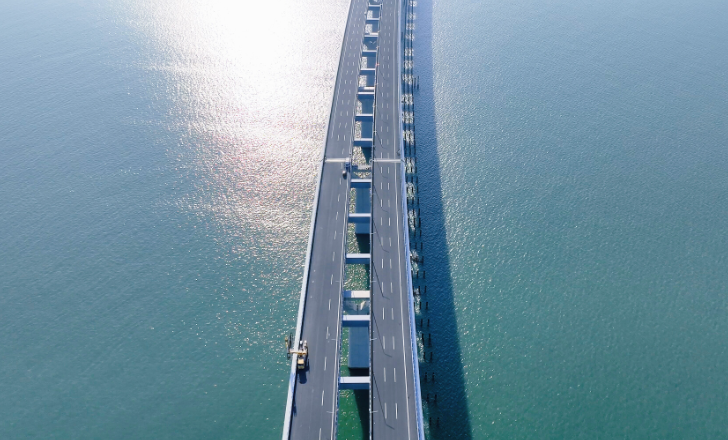
Cross-sea bridges, deep-water terminals, offshore wind farms... While these "colossal giants" built in the ocean are magnificent to behold, they endure the daily "brutal torture" of wave erosion, salt and alkali corrosion, and alternating wet-dry cycles. In such an environment, ensuring that hardened Concrete Structures remain intact—free from shattering, cracking, or premature failure—has long been a vexing challenge for the global engineering community.
For a long time, Steel Fibers have frequently been incorporated into concrete to enhance toughness and prevent cracking. However, steel fibers often prove ill-suited to the harsh conditions of salt spray and seawater; once chloride ions infiltrate the crevices within the concrete, the steel fibers rust and expand in volume, paradoxically causing the concrete to crack from the inside out and accelerating structural collapse.
Recently, a new material study focused on high durability for marine engineering has offered a highly promising solution: basalt fibers—produced by drawing strands from natural volcanic rock—can be utilized to clad marine concrete in a layer of "armor" that is virtually immune to rust. This is achieved through a multi-scale gradation model featuring a combination of "large fibers for structural bonding" and "small fibers for pore sealing."
I. The Anti-Corrosion Secrets Hidden Within Volcanic Rock
Addressing the critical flaws inherent in existing materials—specifically the susceptibility of steel fibers to rust and the tendency of organic fibers (such as polypropylene or polyvinyl alcohol) to age and degrade within alkaline concrete environments—Basalt fibers demonstrate exceptional material advantages. Produced by melting pure natural volcanic rock at ultra-high temperatures and drawing it into fibers, their core structural framework consists primarily of an amorphous network of silicon-oxygen and aluminum-oxygen bonds. This natural, stone-based structure exhibits extremely high chemical inertness when exposed to the strongly alkaline pore fluids within concrete and the high-salinity environment of seawater, thereby fundamentally eliminating the physical risks associated with "corrosion, rusting, and volumetric expansion." To achieve superior crack resistance and impermeability, the latest research breaks away from the traditional "single-fiber" paradigm, proposing instead a "multi-scale homogeneous basalt fiber system":
Macro-structural Twisted Basalt Fibers (SBF): Coarse, long, and twisted fibers dispersed throughout the matrix; their primary function is to bridge and bind together existing macro-cracks, thereby providing post-cracking flexural toughness and tensile stiffness.
Micro-structural Chopped Basalt Microfibers (NBF): Fine microfibers that, much like grains of sand, pack tightly into the minute pores and channels within the hardened cement matrix, effectively blocking seawater penetration pathways and arresting the propagation of incipient micro-cracks.
This "coarse-and-fine combination" strategy creates a dense, intricate web woven deep within the concrete structure—a comprehensive defense mechanism that tackles both impermeability and crack control simultaneously.
II. A "Brutal" 270-Day Wet-Dry Cycling Test
To determine whether this novel concrete could achieve "longevity" in a marine environment, the research team simulated an extremely rigorous alternating wet-dry environment. This involved doubling the concentration of the seawater solution and subjecting the samples to alternating cycles of high-temperature drying (at 45°C) and full saturation—with each 24-hour period constituting a single complete wet-dry cycle.
After enduring 270 days of this grueling ordeal, the concrete samples incorporating different fiber systems exhibited vastly divergent performance outcomes:
All-Basalt Multi-scale Hybrid Group (B15N02: i.e., 1.5% coarse fibers + 0.2% microfibers): This group delivered exceptionally impressive results. After 270 days, its equivalent flexural strength retention rate stood at a remarkable 76.14%, while its initial cracking strength retention rate reached 90.67%. Furthermore, mass loss attributable to surface spalling caused by seawater exposure was a mere 1.43%. When confronted with environmental weathering, the overall material degradation process proceeded at an extremely slow and gradual pace.
Steel Fiber Hybrid Group (S15N02): Prior to the onset of corrosion, this group demonstrated exceptionally high initial flexural performance—a direct result of the inherent high stiffness of the steel fibers themselves. However, by the 270-day mark, the steel fiber-reinforced concrete had undergone a fundamental and drastic reversal in performance. Due to extensive rusting, its equivalent flexural strength retention rate plummeted to 50.22% (effectively halving its strength); in the later stages, distinct localized rust-induced expansion patterns and cracks became evident.

III. A Microscopic Showdown: Why Does Steel Collapse While Basalt Remains Stable?
Images captured via Scanning Electron Microscopy (SEM) directly reveal the fundamental nature of the performance divergence between the two materials:
The Catastrophic Failure of Steel Fibers: Seawater and oxygen readily penetrate through microscopic voids in the concrete to contact the steel, triggering severe electrochemical corrosion. The volume of the resulting reddish-brown iron rust expands to between 2 and 6.5 times its original size. This immense internal pressure directly "pushes" against the surrounding cementitious matrix, generating a network of radial micro-cracks. As internal damage intensifies, the bond between the steel fibers and the concrete matrix completely degrades; ultimately, under load, the fibers are prone to being easily pulled out or slipping—either wholly or partially—thereby losing their structural bridging stiffness.
The Gentle Adaptation of Basalt Fibers: Basalt fibers exhibit absolutely no volume expansion when exposed to seawater. Their hydrolysis process—characterized by the gentle dissolution of Si-O-Si bonds—proceeds at an extremely slow pace, resulting only in slight, localized pitting and surface roughening at the nanoscale. Far from damaging the matrix, this subtle surface roughening actually enhances the interlocking friction between the fibers and the surrounding concrete.
Furthermore, concrete mix designs often incorporate industrial byproducts—such as fly ash and slag—to partially replace traditional cement. While this practice reduces carbon emissions during production by 27%, it also significantly lowers the long-term alkalinity of the concrete. This effectively creates a gentle, "alkali-resistant protective capsule" for the basalt fibers, further suppressing their dissolution rate.
IV. Functioning with Cracks? It Can Also Prevent Future Damage
In real-world engineering applications, structural components inevitably operate under "injured" conditions. To simulate this reality, the research team artificially induced micro-cracks ranging from 0.1 mm to 0.3 mm in width within the test specimens:
In the steel fiber group, the presence of these micro-cracks allowed moisture to directly infiltrate the tensile zone; this led to a rapid loss of the steel fibers' bridging capacity and a precipitous decline in the material's ductility. The homogeneous multi-scale basalt fiber group demonstrates exceptional damage tolerance within a crack opening range of 0.1 mm to 0.2 mm, achieved through the synergistic action of "pinning" by fine fibers and "tensioning" by coarse fibers. Even when pre-existing cracks widen to 0.3 mm, the material retains a high level of flexural-tensile load-bearing capacity, thereby successfully extending the safety threshold for damaged structures in marine engineering applications.
Conclusion
From the perspectives of "Life Cycle Cost (LCC)" and low-carbon environmental sustainability, although basalt fibers may entail slightly higher initial procurement costs due to their specialized drawing process, their virtually "maintenance-free" nature throughout their service life offers significant long-term advantages. Over a project's operational span—typically ranging from 50 to 100 years—their use not only eliminates the substantial, unforeseen total costs associated with frequent repairs and the application of anti-corrosion coatings, but also substantially reduces structural self-weight, thereby saving on transportation expenses and the charter fees for large-scale offshore installation vessels.
In an era where equal emphasis is placed on reducing carbon emissions throughout a project's life cycle and ensuring engineering safety, this "anti-corrosion armor"—crafted from volcanic rock—is emerging as a safer and more eco-friendly guardian for marine clean energy projects, such as cross-sea transportation links and offshore wind farms.