





Basalt Fiber: A Dual Engine for Lightweighting and Safety in New Energy Vehicles
Basalt fiber composite materials, with their advantages of being Lightweight, high-strength, safe, and environmentally friendly, help new energy vehicles reduce weight by 30%-50%, improve impact resistance by over 40%, and significantly extend driving range. This "green material" derived from volcanic rock also possesses fire-resistant, insulating, and corrosion-resistant properties, demonstrating outstanding performance in battery systems, body structures, and chassis components, accelerating the industry's progress towards a safer and more efficient future.
Basalt fiber composite materials are moving from the laboratory to the mass production line of new energy vehicles. With their comprehensive advantages of being lightweight, high-strength, safe, reliable, economical, and environmentally friendly, they are becoming an ideal material to replace traditional steel and aluminum alloys. This "green material" derived from volcanic rock can achieve a 30%-50% reduction in vehicle weight while improving impact resistance by over 40%, significantly extending battery driving range, and injecting new momentum into the new energy vehicle industry.
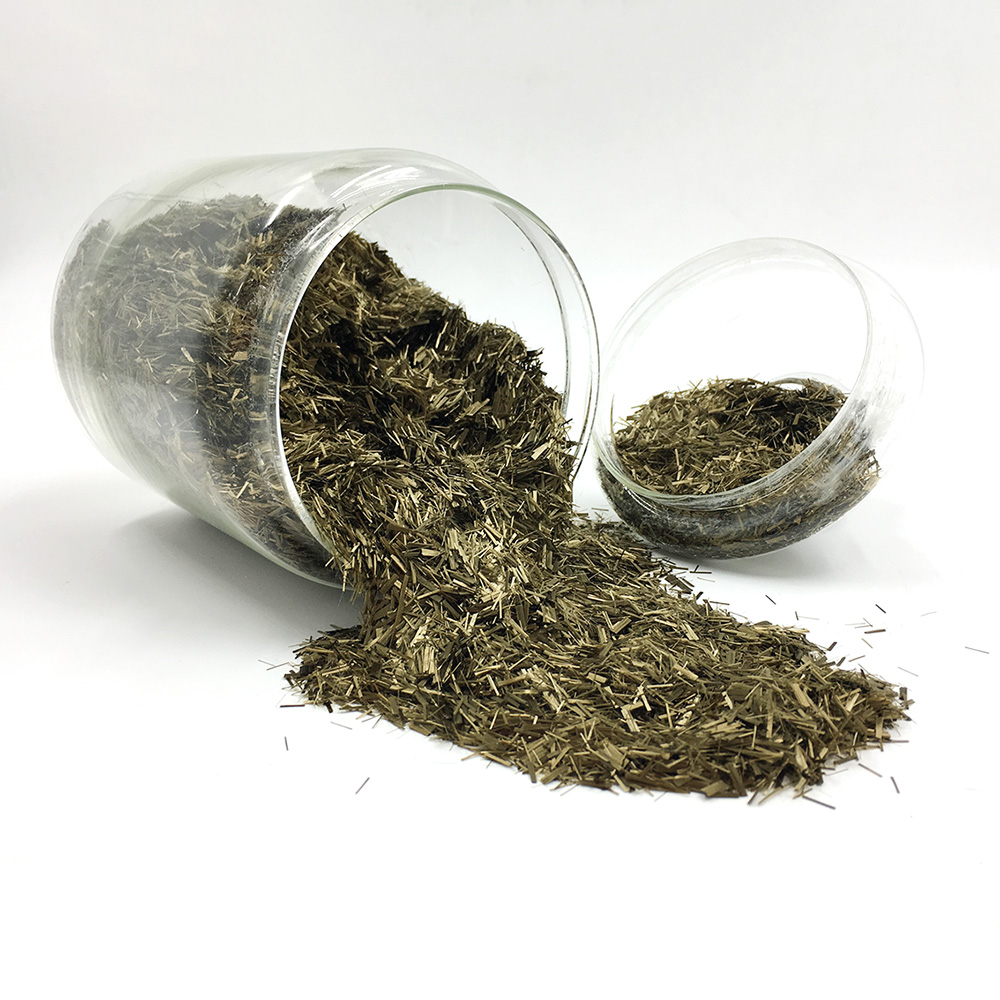
A Versatile Performer in Basalt Fiber Materials
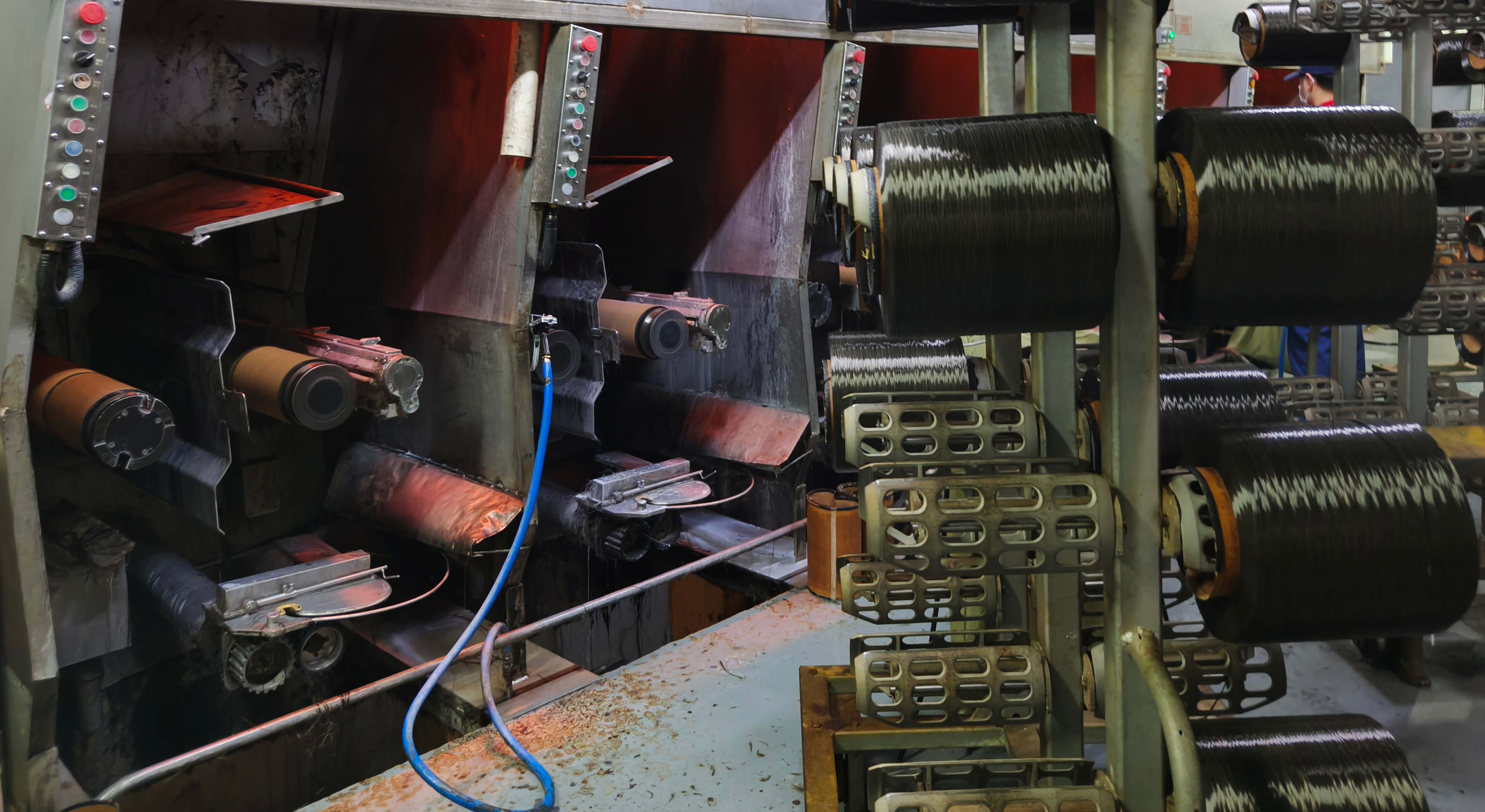
Basalt fiber is a high-performance inorganic fiber made by melting natural basalt ore at 1450-1500℃ and then drawing it through a platinum-rhodium alloy spinneret. Its unique properties perfectly meet the needs of new energy vehicles:
* Lightweight:** Density is only 2.65g/cm³, one-third that of steel and two-thirds that of aluminum alloy, yet possesses strength comparable to steel.
* Ultra-High Strength:** Tensile strength reaches 2500-4800MPa (35 times that of ordinary steel), and flexural strength can reach 1200MPa, 25% higher than glass fiber.
* Fire Resistance:** Softening point is close to 1000℃, limiting oxygen index >63, non-combustible rating V0, does not deform or explode when exposed to fire.
* Insulation:** Surface resistivity ≥10⁹Ω·cm, effectively preventing battery leakage risks.
Corrosion Resistance: After 5000 hours of salt spray testing, strength decreased by only 9.8%, and chloride ion penetration depth was only 0.12mm (1/3 that of aluminum alloy).
Thermal Stability: Stable performance under extreme temperatures ranging from 269℃ to 700℃, making it particularly suitable for battery system thermal management.
Environmental Benefits: Raw materials are inexhaustible; production energy consumption is 1/3 that of aluminum alloy, carbon emissions are reduced by 70%, and it is 100% recyclable.
The "Golden Partner" for New Energy Vehicles – Three Major Application Areas
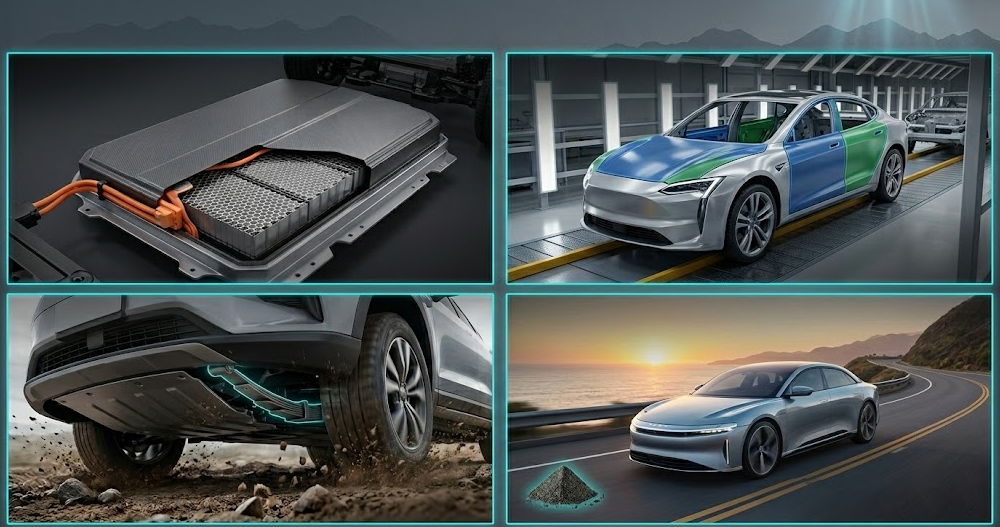
1. Battery System (Battery Pack Housing): A Perfect Combination of Safety and Lightweighting
Replacing aluminum alloy achieves a 35%-50% weight reduction, increasing battery energy density and driving range.
Excellent thermal insulation performance prevents battery overheating and extends battery life by 15%-20%.
High-strength protection against battery impact damage, improving impact resistance by 35%.
Insulation properties eliminate the risk of leakage and meet high-voltage safety standards.
BYD has successfully developed basalt fiber battery pack cover technology, achieving a dual improvement in lightweighting and safety, setting an industry benchmark.
2. Body Structure (Body Frame and Coverings): Creating a "Light as a Swallow, Solid as a Rock" Safe Cabin. A 40% weight reduction while maintaining structural strength, improving handling and energy efficiency.
Utilizing a basalt/glass fiber hybrid design (30% basalt + 70% glass fiber), the bending strength reaches 1200MPa, and impact resistance is improved by 30%, meeting the CNCAP five-star crash test standard.
Minor thermal deformation ensures long-term vehicle stability and aesthetic consistency.
FAW Hongqi plans to apply basalt fiber body materials on a large scale for the first time in its E702 electric vehicle, driving a revolution in automotive lightweighting.
3. Chassis and Key Components: Dual Improvement in Performance and Lifespan.
Chassis skid plate: A 40% weight reduction, improving aerodynamic efficiency while protecting the battery from road impacts.
Suspension System: Leaf springs are 50%-70% lighter, fatigue life is increased 5 times, and energy consumption is reduced by 12%-15%.
Wheels: Reduced from 15kg to 8kg using traditional aluminum alloy, reducing unsprung mass and improving comfort and handling.
Braking System: Brake pads are reinforced with basalt fiber, ensuring stable high-temperature friction coefficient, eliminating "heat fade," improving braking response by 15%, and reducing noise by 30%.
Comprehensive Safety Upgrade – Four Major Protective Barriers
1. Collision Safety: Energy Absorption Master
The basalt fiber composite energy-absorbing box absorbs 40% more energy than traditional steel in a collision. Through delamination and fiber pull-out mechanisms, it disperses impact force, effectively protecting the cabin and battery.
2. Battery Protection: Building a "Firewall"
Thermal Runaway Protection: Remains undeformed at 1000℃, preventing the spread of battery thermal runaway and preventing a chain reaction of fire.
Electrical Insulation: Breakdown voltage >15kV, preventing battery leakage from causing injury to occupants.
Structural Protection: Puncture resistance increased by 60%, preventing battery damage from chassis impacts.
3. Environmental Adaptability: All-weather Safety Guarantee
Weather Resistance: Resistant to UV rays and acid rain corrosion, extending service life by 2-3 times and reducing maintenance costs by 70%.
Temperature Stability: Dimensionally stable in extremely cold (40℃) and extremely hot (60℃) environments, ensuring consistent vehicle performance.
4. Electromagnetic Compatibility: Quiet and Safe Space
Excellent electromagnetic shielding performance (effectiveness >30dB), reducing electromagnetic radiation inside the vehicle, protecting occupant health, and improving communication quality.
Double the Driving Range – The "Multiplier Effect" of Lightweighting
Basalt fiber composite materials improve the driving range of new energy vehicles through three main pathways:
1. Direct Weight Reduction: For every 10% reduction in vehicle weight, the driving range increases by 5%-8%. For a 2-ton electric vehicle, a weight reduction of 300kg can increase the driving range by 4060km.
2. Reduced Energy Consumption: Reduces motor drive energy consumption by 12%-15%, reduces air conditioning system load by 8%-10% (lightweight design reduces energy consumption), lowers rolling resistance, and reduces tire wear by 10%.
3. Improved Battery Efficiency: Reduces battery pack weight, increases energy density, and excellent thermal management characteristics ensure the battery always operates within its optimal temperature range, improving charge and discharge efficiency by 7%-10%.
4. Comprehensive Benefits: New energy vehicles using basalt fiber composite materials can increase driving range by 15%-25%, while reducing battery costs by 15%-20% (allowing for smaller battery packs to achieve the same driving range).