




Research Status and Prospect of Basalt Fiber Application in Environmental Protection Field
Current status of applied research in the field of environmental protection
1. Environmental filtration materials
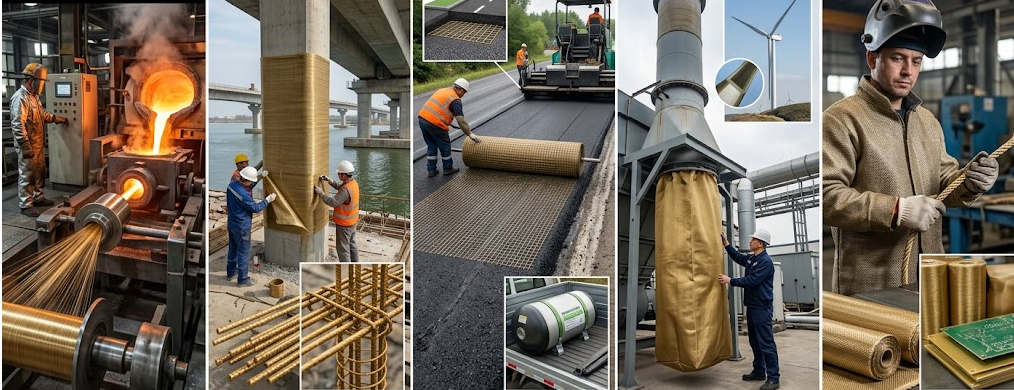
Basalt fiberis widely used in high temperature flue gas filtration, wastewater treatment and other fields because of its high corrosion resistance and Chemical stability. For example, in industrial waste gas treatment, basalt fiber filter media can withstand acidic gases and high temperatures (more than 700 ℃), significantly extending the service life of the filter bag, while reducing maintenance costs. In wastewater treatment, basalt fiber-reinforced composites can be used to make high-efficiency filter membranes to improve pollutant removal efficiency.
2. Sound and vibration damping materials
Basalt fiber's sound-absorbing performance is superior to that of traditional materials, and has been used in scenarios such as traffic noise barriers and building sound insulation layers. Its porous structure can effectively absorb sound waves, and at the same time, it has the advantages of light weight and durability, which is in line with green building standards.
3. Solid waste treatment and resource utilization
Basalt fiber can be used to solidify industrial waste, such as fly ash, slag, etc. and basalt fiber combined to make new building materials, not only to reduce the accumulation of solid waste, but also to enhance the strength of the material. In addition, its degradable characteristics reduce the secondary pollution of the environment.
4. Ecological restoration project
In the field of soil restoration, basalt fiber reinforced ecological slope protection materials are used to prevent soil erosion, and its weather resistance and scour resistance are better than traditional materials.
5. New energy supporting applications
Basalt fibersshow potential in new energy applications, such as the manufacture of photovoltaic frames and wind turbine blades. Its Lightweight properties reduce the weight of photovoltaic modules, and its corrosion resistance extends the service life of equipment in harsh environments.
Technical Advantages
Environmentally friendly production process
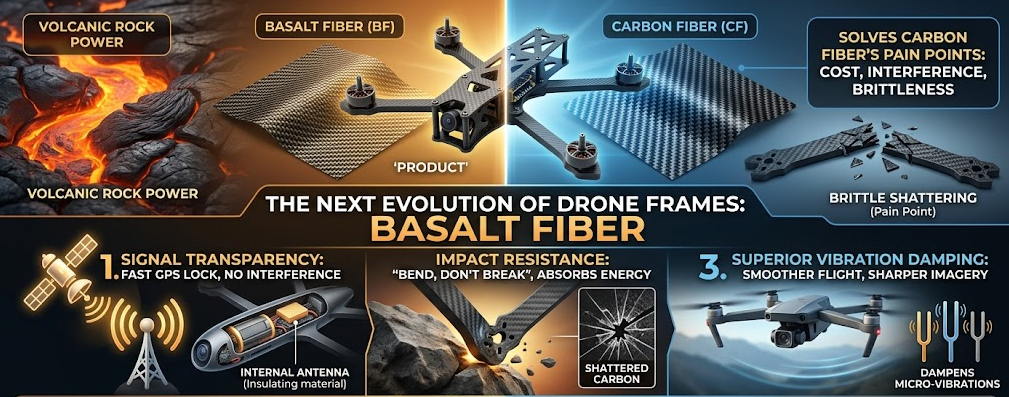
Basalt fiber is naturally rich in raw materials, the energy consumption of production is only 1/3 of carbon fiber, and there is no need to add chemical additives, and the waste can be naturally degraded, which is in line with the requirements of the “dual-carbon” goal.
Future Development Trends and Challenges
1. Direction of technological innovation
- Development of high-performance composite materials: focus on breakthroughs in basalt fiber and resin, ceramic composite technology, to enhance its performance in extreme environments.
- Low-cost large-scale production: optimize the melt drawing process, reduce energy consumption (such as the use of photovoltaic energy supporting the production), and promote the further decline in market prices.
2. Application expansion
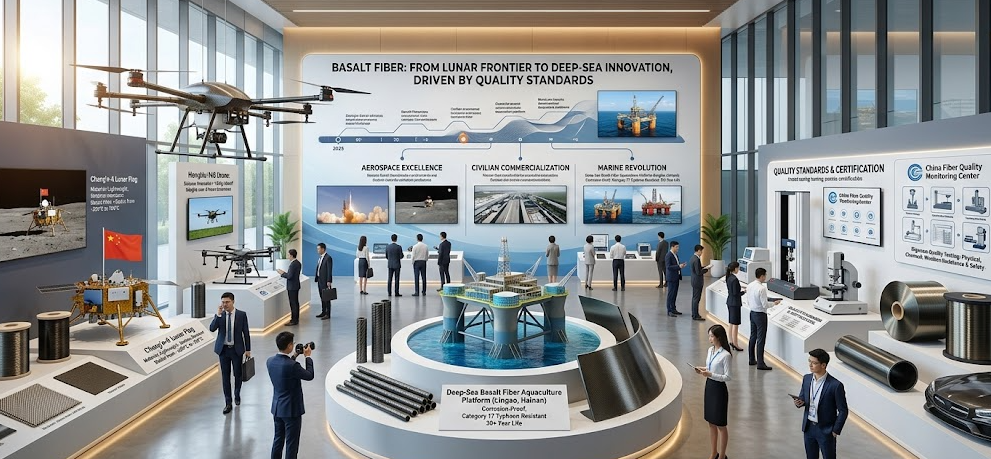
- Marine environmental protection engineering: the development of seawater corrosion-resistant basalt fiber pipes and anti-fouling materials, applied to offshore oil platforms and ecological restoration.
- Intelligent city infrastructure: such as basalt fiber reinforced intelligent manhole covers, environmental protection street light poles, etc., in conjunction with the Internet of Things technology to achieve real-time monitoring.
3. Challenges and countermeasures
- Technical bottleneck: fiber uniformity and strength still need to be improved, need to strengthen cooperation between industry, academia and research.
- Low market recognition: need to enhance product recognition through industry exhibitions and international standardization.
Summarize
Basalt fiber applications in the field of environmental protection is extending from traditional filtration, building materials to high-end environmental protection equipment and ecological restoration. With increased policy support and technology iteration, its market potential will be further released. It is expected that by 2025, China's basalt fiber market size will exceed 10 billion yuan, environmental protection applications are expected to account for more than 30%. In the future, we need to focus on breaking through technical barriers and promote collaborative innovation in the industrial chain to realize the win-win situation of environmental benefits and economic benefits.
