








The Rise of Basalt Fiber
Basalt fiber, abbreviated as CBF, is an inorganic non-metallic continuous fiber produced solely from basalt ore through high-temperature melting and drawing processes. It not only possesses excellent mechanical properties, such as high strength and high modulus, but also exhibits good Chemical stability, high-temperature resistance, and cost advantages. As an important mechanical reinforcing mineral functional material and green structural material, basalt fiber has successfully joined the ranks of my country's four key fiber materials for development (alongside carbon fiber, aramid fiber, and ultra-high molecular weight polyethylene fiber).
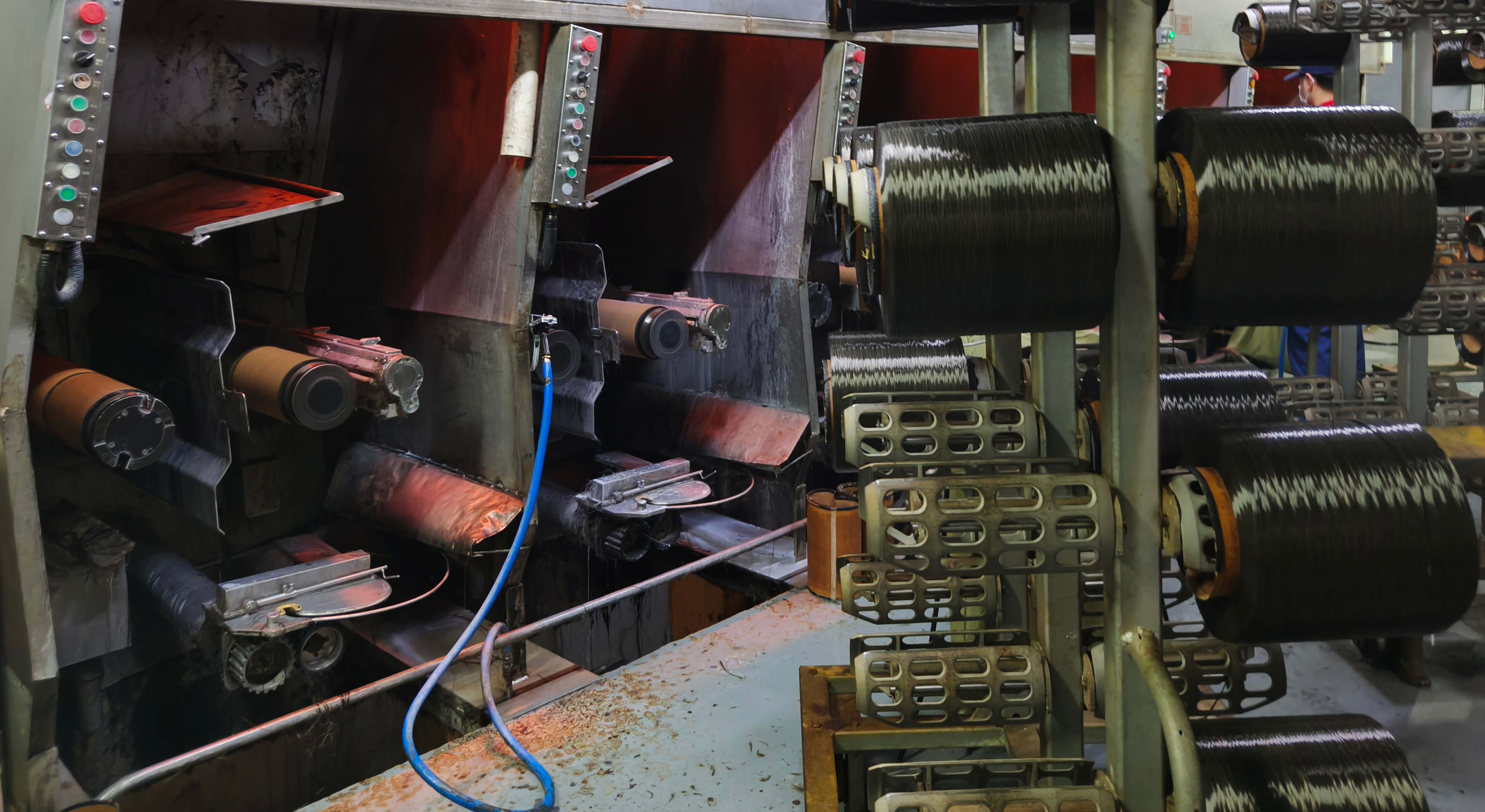
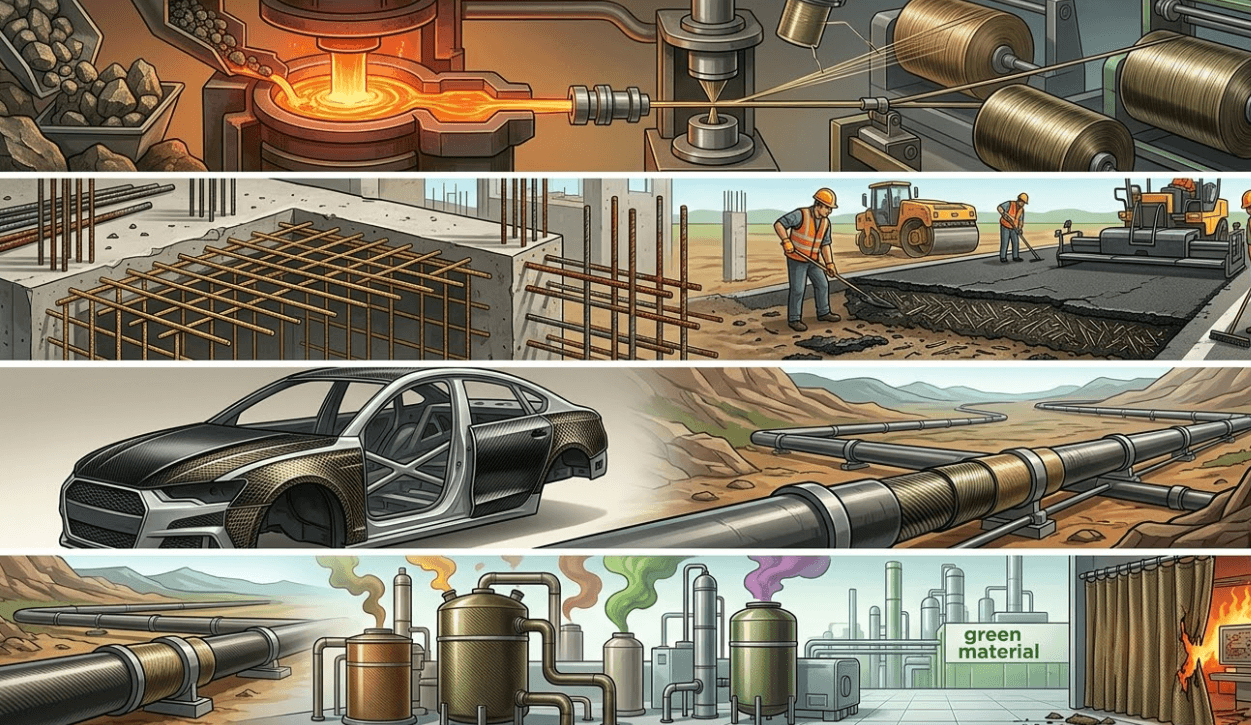
The preparation process of basalt fiber involves several key stages, including material selection, grinding, melting, and drawing. The material selection stage requires sufficient raw ore reserves and performance indicators meeting standards; the grinding stage involves raw material crushing, magnetic separation, and uniform stirring; during the melting process, the material to be used needs to be preheated to approximately 900℃, and then heated to 1300–1400℃ in an electric furnace; finally, the melt is drawn into fibers through a drawing process, and then wound into a cylindrical product by equipment such as a sizing agent, a bundler, a fiber tensioner, and an automatic winding machine. It is worth noting that the chemical composition of basalt ore has a decisive influence on fiber-forming performance indicators. Excessive iron content may lead to poor thermal permeability and incomplete melting of the basalt melt, thus reducing melting efficiency. Furthermore, natural factors such as variations in basalt deposit composition and uneven internal crystallization can also affect fiber quality. During heating, denser iron oxides accumulate in the platinum-rhodium alloy perforator at the bottom of the kiln, causing erosion problems. Simultaneously, basalt has a narrow fiber-forming temperature range, with crystallization temperature essentially coinciding with the drawing temperature; this crystallization phenomenon adversely affects the tensile strength of the fiber.
Basalt Fiber's Main Performance Comparison with Other Fibers
Basalt fiber, with its unique properties, has emerged as a leader in Lightweight, high-strength composite materials. It not only boasts outstanding tensile strength and elastic modulus but also possesses a long service life, pollution-free characteristics, a wide operating temperature range, and low moisture absorption. Among many fiber materials, basalt fiber stands out because it uses only a single natural mineral raw material, and its production process is environmentally friendly, requiring no additives.
Next, we will delve into the structural characteristics, performance advantages, and application potential of basalt fiber in various fields.
(1) Coupling Agent Modification Process
Coupling agent modification is widely used to improve the interfacial interaction of composite materials, thereby enhancing their mechanical, thermal, and electrical properties. This process utilizes the "bridging" effect of coupling agents to connect different materials, enhancing their compatibility.
(2) Combined Nano-Modification and Coupling Agent Modification Process
Basalt fiber composites can be further optimized through a combined process of nano-modification and coupling agent modification. This combined modification process can fully utilize the excellent properties of basalt fiber and broaden its application areas.
Basalt fiber has broad application potential in multiple fields.
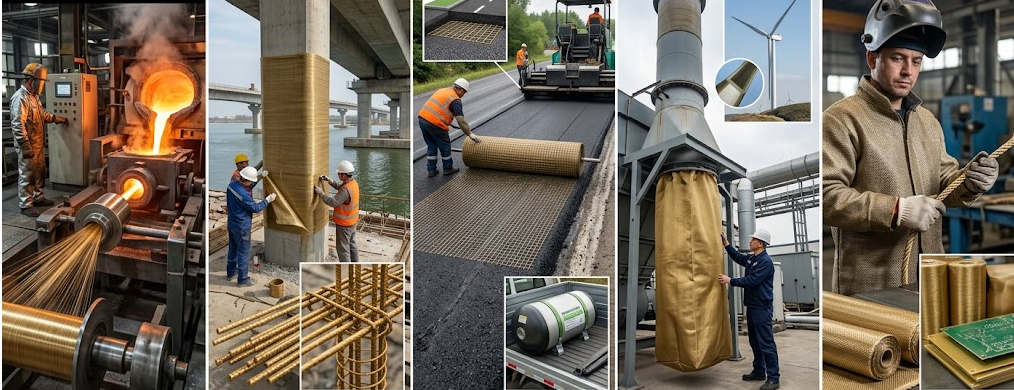
For example, in the chemical industry, it can be used as a corrosion-resistant material; in the automotive industry, it can be used as a wear-resistant and friction-resistant material, as well as for target areas resisting low-speed impacts; in the construction field, basalt fiber can enhance the strength and durability of concrete and cement mortar. Furthermore, basalt fiber also has excellent high-temperature resistance, making it suitable for high-temperature insulation, fireproofing, and heat resistance in the automotive industry. Next, we will explore in detail the applications of basalt fiber in the fields of building materials and civil engineering. In construction, basalt fiber can be used to produce pultruded profiles or reinforcing bars for concrete reinforcement. It is stronger and lighter than steel, while possessing natural resistance to alkalis, rust, and acids. Furthermore, basalt fiber has the same coefficient of thermal expansion as concrete, making it easy to cut into specific lengths, ideal for construction applications.
Similarly, basalt fiber plays an important role in road engineering. It can be used as a reinforcing material for asphalt concrete, effectively improving the tensile strength, toughness, and resistance to rutting deformation of the pavement.
In addition, basalt fiber exhibits excellent performance in the petrochemical field. It can withstand the erosion of organic gases, providing a new material option for oil and gas engineering. For example, new products and processes for lightweight, high-strength basalt fiber materials and composites can be developed for pipeline transportation of oil and gas, hot and cold liquids, and bulk materials, as well as the manufacture of long-distance, high-pressure hydrogen pipelines.
In conclusion, basalt fiber, with its unique properties and broad application potential, is playing an increasingly important role in various fields. With the continuous advancement of technology, the application prospects of basalt fiber are expected to be even broader.