




BFRP Development Dilemma
1 Preparation difficulties
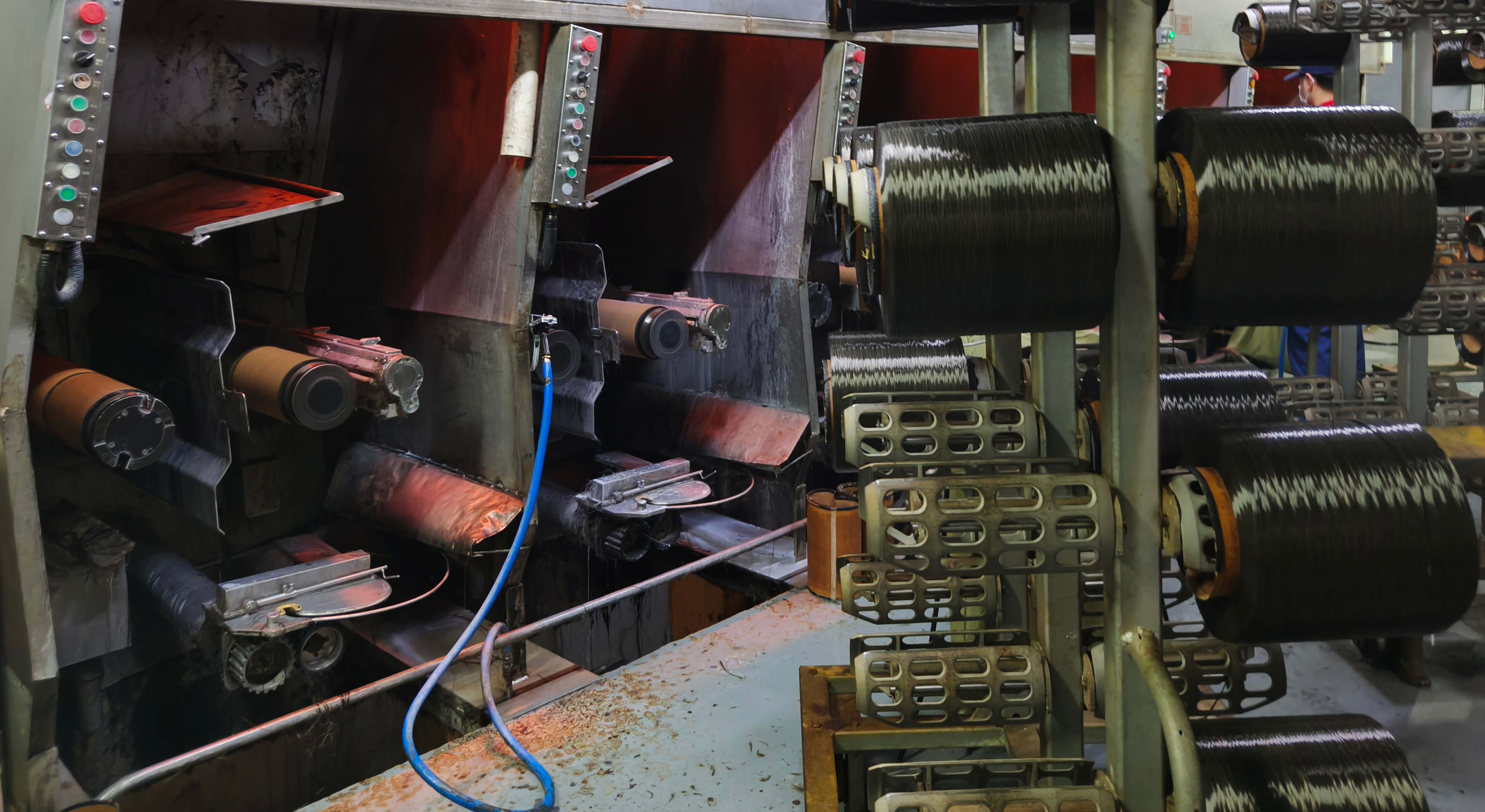
The quality of BF is one of the important factors affecting the quality of BFRP. However, the current research on BFRP is mostly focused on the difference in the enhancement effect of BF compared with other fibers on the material properties, as well as the determination of various properties of BFRP under different materials. There is a lack of research on Basalt components, resource distribution, BF production process, physical and mechanical properties, and physical and mechanical properties of BFRP based on raw materials from different regions. Due to the large differences in basalt components in different regions, will lead to large differences in the quality of different batches of BF, such as in the production process without further refinement of the classification of basalt, using the same process conditions, it will lead to basalt can not be fully melted, which restricts the generation of high-performance BF, which will affect the manufacture of high-performanceBFRP. At present, due to the shortcomings of the BF preparation process, the film-forming agent used in the production of BF is mostly used in the production of film-forming agents used in the production of other fibers; the high-temperature melt is not fully homogenized, resulting in serious breakage of filaments; and domestic production of BF factories are generally used in the production of small-scale Crucible Furnace to achieve the production of large-scale industrialization of the plant is less restrictive of the large-scale industrialization of the production of high-performance BF, reducing the output of high-performance BF. Due to the production of the BF process, the wear and tear of the leakage plate, and the need for frequent refurbishment, small leakage plates average service life of only 9 months, and large leakage plates about 11 months. The leakage plate is mostly made of platinum alloy, and the cost is high, resulting in a high production cost of BF, hindering the development of BFRP to the road of low cost. The composite process of BF and other materials is also one of the important factors affecting the quality of BFRP. In the process of BFRP prepared by direct blending process, the smooth interface of BF and the characteristics of BF not easy to react with other materials will lead to BF and material bonding is not close, easy to detach from the material, resulting in BFRP performance enhancement effect can not reach the expected, or even reduce the original strength of the material and the phenomenon of water resistance. The impregnation fusion process produces BFRP base materials with higher numerical accuracy. Therefore, to obtain more high-performance BFRP, the requirements for the ratio of BF to other modifiers and materials and the compounding conditions under different matrices are more stringent. However, there is still room for in-depth research on optimizing mixing ratios and processes in the composite process.
2 Modification bottleneck
Currently, fiber interface modification is mainly used to solve the problem of fiber-material bonding in BFRP. Although all of them can achieve the purpose of increasing specific surface area and bonding strength between interfaces, each modification method has certain limitations, such as not being able to carry out mass production, polluting the environment, and complicated processes. Though many kinds of compound modification can achieve the purpose of complementing each other's advantages, at present, there is a lack of systematic analysis on the matching ratio case, modification effect, and actual application of BF interface compound modification under different matrices. Fiber blending can play a complementary positive hybrid effect, but there are many factors affecting the enhancement effect of fiber blending. Different lengths and types of fibers can achieve different reinforcing effects, and excessive or small amounts of blending will affect the reinforcing effect, fail to achieve the expected results, and even reduce the performance of the material itself. Although there are studies on the optimal blending length, dosage, and performance enhancement data of BF under different matrices, the progress of research on the blending enhancement process based on different materials is different, and there is a lack of systematic research and summarization on the types, lengths, ratios, dosages and mixing processes of blended fibers.
3 Application Difficulties
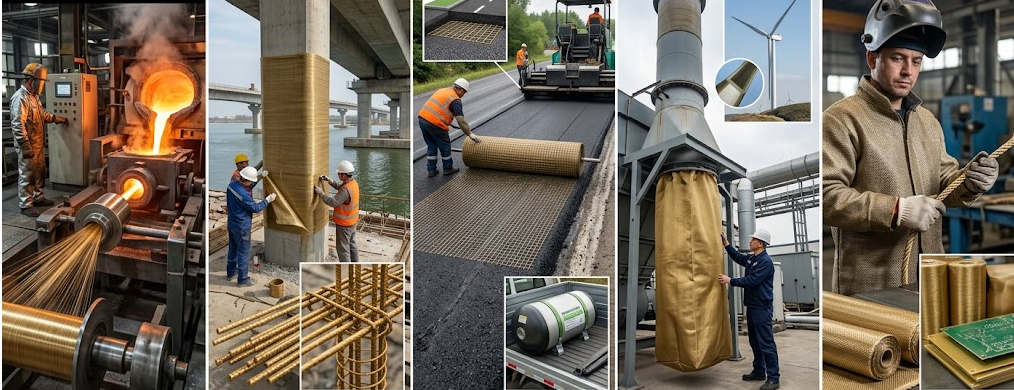
Building structure reinforcement, and transportation road paving are the most widely used BFRP, the largest amount of direction. Most of the direct mixing process and concrete, soil, asphalt, gypsum, and other composite BFRP. Its added value is low, and the current research on such products is mostly focused on the strength of BFRP specimens, Corrosion Resistance, porosity, etc., however, there are few of the above materials in the actual engineering applications in the environment of the performance of the statistics and research.BFRP in lightweight and high-strength automotive manufacturing, lightweight high-temperature aerospace materials, high-strength corrosion resistance pipe sheet applications, etc. is slightly insufficient. However, there are few statistics and studies on the performance of BFRP in actual engineering applications. For example, thermoplastic polymer composite pipe end treatment and pipe connection technology is still defective, in terms of high-pressure resistance, BFRP oil pipe and casing have great limitations.