

Research on basalt fibers in civil engineering applications
1.Main application directions
- Concrete reinforcing materials
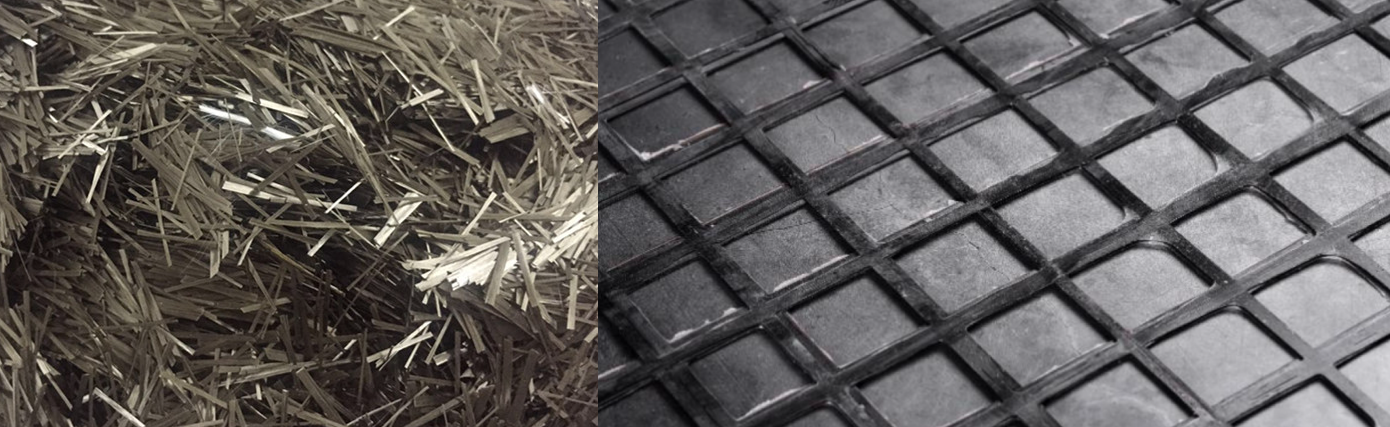
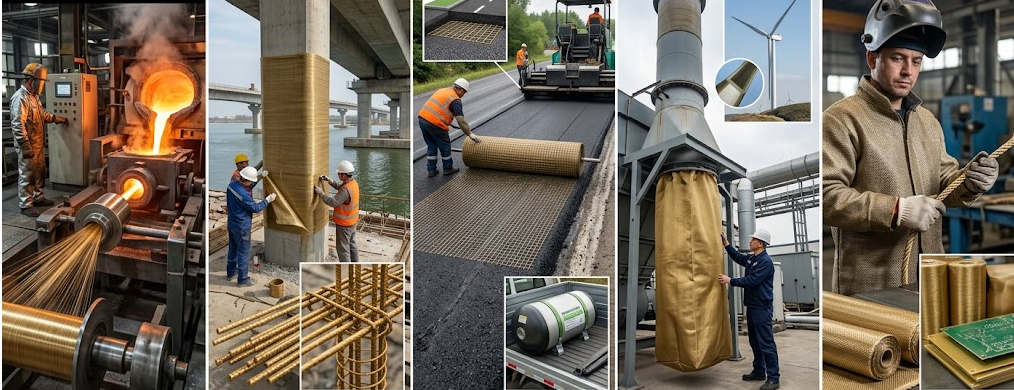
Fiber Concrete (BFRC): Short-cut Basalt Fibers (6-24mm) are mixed into concrete (mixing amount 0.1%-0.5%), which can significantly improve crack resistance (reduce crack width by 30%-50%), impact resistance (increase by 2-3 times), and durability (freeze-thaw cycling resistance increased by 40%).
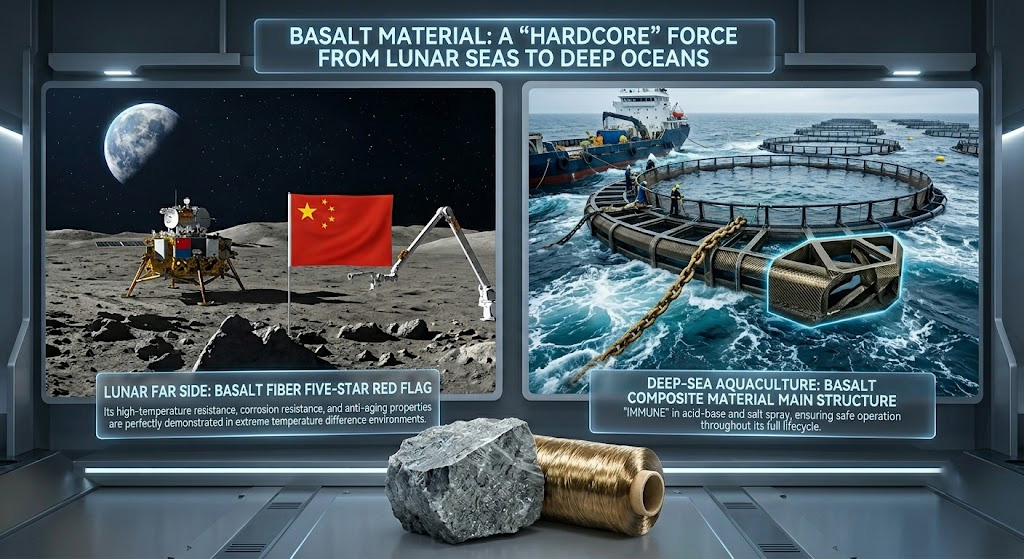
Replacement of steel reinforcement: In corrosive environments (e.g. marine engineering), basalt fiber reinforcing bars (BFRP bars) can replace steel reinforcement to avoid corrosion problems. For example, the use of bfrp reinforcement in the piers of a cross-sea bridge in Qingdao is expected to extend its lifespan to more than 100 years.
- Structural reinforcement and repair
Fiber Cloth/Mesh Reinforcement: Basalt fiber cloth (tensile strength ≥2000MPa) is pasted on the surface of beams and columns, which can increase the load carrying capacity by 20%-30%. For example, after an old bridge in Sichuan is reinforced with BF cloth, the load rating is upgraded from Highway-II to Class I.
Seismic reinforcement: fiber-reinforced composites (BFRP) wrapped concrete columns, which can enhance the ductility and energy-consuming capacity, and is suitable for buildings in earthquake-prone areas.
- New composite structures
Basalt fiber-polymer sandwich panels: used for lightweight roofs and partition walls, with both high strength and thermal insulation (thermal conductivity ≤ 0.05 W/m-K).
3D printing building materials: basalt fiber-reinforced cementitious materials can realize complex structure printing and reduce construction waste.
2.Technical Advantages and Core Data
| Performance Indicators  | Basalt fiber  | Comparison material (glass fiber) |
| Tensile strength | 3000-4800 MPa | 2000-3500 MPa |
| Alkali resistance (pH=13)  | Strength retention ≥90%   | Glass fiber: strength retention ≤ 50% |
| Environmental advantages: production energy consumption is only 30% of glass fiber, and can be 100% recycled. | ||
3.Research Progress and Typical Cases
- Domestic research
Tsinghua University: developed basalt fiber-nano-silica composite modified concrete with 25% compressive strength increase and 60% chloride ion permeability reduction.
Southeast University: proposed BF/epoxy resin laminate reinforced reinforced concrete beam technology, fatigue life extended by more than 3 times.
- International application
Japan: After the Hanshin earthquake, a high-rise building in Osaka adopted BF mesh reinforced shear wall, and the seismic performance was improved by 40%.
Europe: BF reinforced concrete was used in flood control gates in Venice, Italy, with a life span of 50 years against seawater erosion.
- Engineering Cases
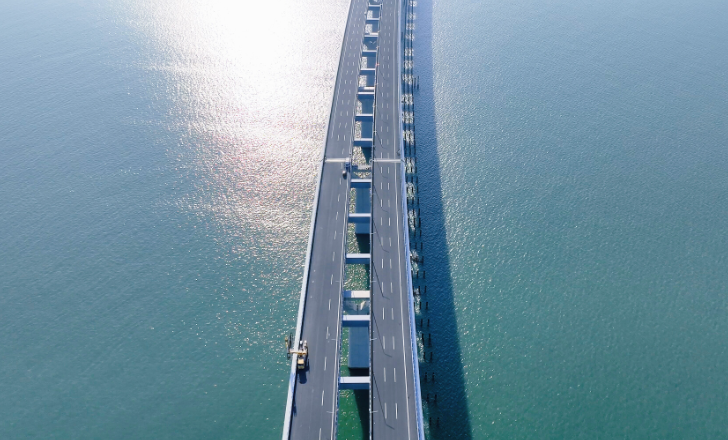
China - Hong Kong-Zhuhai-Macao Bridge: Basalt fiber composite material is used in the anti-corrosion layer of some piers, reducing the maintenance cost by 30%.
USA - San Francisco Bay Area Rapid Transit (BART): BF fabric is used in tunnel lining reinforcement, and the deformation resistance is increased by 25%.
4.Challenges and Future Directions
- Existing problems
Insufficient interfacial bonding performance: the interface between fiber and concrete/resin is prone to stripping, new coupling agents (e.g., silane modifiers) need to be developed.
Lack of long-term performance data: creep characteristics of BF reinforcement under high temperature and high humidity environment (more than 10 years of data is still imperfect).
Uniformity of standard system: engineering design specifications for BF materials in various countries have not yet been fully established (China has released GB/T 38143-2019, but the application details are to be refined).
- Future research direction
Intelligent fiber composites: embedded sensors to achieve structural health monitoring (e.g., strain, crack self-awareness).
Green preparation technology: reduce the melting and drawing temperature (currently need 1400-1500℃), and develop low-carbon process.
Multi-scale synergistic reinforcement: blending with carbon fiber and steel fiber to construct gradient composites.
5.Summary
The application of basalt fiber in civil engineering has moved from the laboratory to engineering practice, and its cost-effective and environmentally friendly attributes fit the demand for green buildings under the goal of “dual-carbon”. In the future, it is necessary to break through the interface optimization, long-term durability verification and other key technologies, and at the same time promote the improvement of design specifications and industrial chain synergies, in order to accelerate its large-scale application in large-scale infrastructure, marine engineering, earthquake and disaster prevention and other scenarios.